Trita Parsi and KJ Noh discuss how the world came to the brink of all-out war overnight as US strikes on Qeshm island were answered by Iran with several drones downed and fighter jets targeted. Why is the US going for tit-for-tat and attempting to keep the media spotlight off its "limited strikes"? What will renewed and intensified US-Israeli aggression on Iran mean for the world order?
The war was supposed to topple Tehran. Trump lost Congress instead, and two days later, Iran's security chief was in the Kremlin. Vijay Prashad, speaking from Kenya, on Putin's call, Iran's nuclear card and what Tehran really gained. Host Zulfiqar Ali brings what his source inside the room says came first.
In Prashad's words: "If I was Iran… I would not put the nuclear issue on the table at all." And: "If Iran does decide to create a nuclear shield… people around the world in the Global South will cheer for Iran." And: "It's also erroneous to say Iran defeated the United States… So it had a strategic victory."
Timeline:
00:10:56 If I was Iran, I would not put the nuclear issue on the table at all
00:12:08 The 2 November call: sources say Putin placed it, and it ran 95 minutes
00:25:48 The Kremlin confirms: Rezaei flew to Moscow to meet Putin
Alex Christoforou, episode 2231, on Russia dismantling Ukraine, the EU rejecting a Trump security plan, Susie Wiles out, and Stephen Miller promoted.
Timeline:
00:00:00 Susie Wiles out, Stephen Miller promoted
00:05:03 Vance pushes for new Iran deal
00:07:46 Zelensky victory tour and the 16 billion claim
00:10:59 Zelensky on CNN: Democrats on our side
00:12:34 Kallas rejects Trump security plan in Warsaw
00:17:22 Russia knocks out Kiev's north bridge
00:19:09 Financial Times on Russia dismantling Ukraine
00:20:15 Musk regrets Starlink for Ukraine
00:23:32 Rutte admits Ukraine won't regain territory
00:25:43 Metsola in Warsaw, Tusk dictator banner
00:28:38 Rutte's Swiss mountaintop comment
00:30:46 Kallas repeats 54,000 casualty claim
00:32:25 Trump becomes Mr. Veto
00:33:35 Swedish media blames Putin for smart fridges
Scott Ritter argues Trump delivered on nothing after the midterms, as buyer's remorse hits voters. He claims the US cannot attack Iran and has lost leverage.
In this conversation, former UN weapons inspector and US Marine intelligence officer Scott Ritter shares his perspective on the US midterm results, the state of Donald Trump's presidency, and US-Iran tensions.
Timeline:
00:00:00 Buyer's remorse after midterms
00:02:29 Divided America and purple voters
00:04:30 Ritter on Trump promises, ICE and war claims
00:08:00 Economy, defeat narrative and leadership vacuum
00:10:04 Democrats, revenge tactics and rudderless ship
00:13:54 Constitution and American voters
00:14:21 Comfort, consumerism and moral compass
00:23:40 Corrupt system, media and campaign money
00:25:46 US economy, foreign policy and Iran war impact
00:30:02 Israel, US policy and moral debate
00:37:48 Iran stance, no compromise and nuclear claims
00:51:29 Why Ritter says US won't attack Iran
00:55:01 Conclusion: No sense in attacking Iran for Trump
Daniel Liszt presents Dark Journalist X-244 on the 2027 warning, continuity of government, NORTHCOM, NORAD, and the UFO file.
00:00:20 Opening: X-244 and the 2027 COG, NORTHCOM, NORAD UFO file warning 00:01:24 Alex Jones appearance begins 00:02:13 Continuity of government from Truman and Eisenhower 00:06:10 COG as a change of constitutional government 00:09:39 NORTHCOM, NORAD, and control of the United States 00:12:04 COG on 9/11 and January 6 00:15:00 Deep events, COVID, and the Butler attempt 00:18:10 Operation Fortress and domestic emergency planning 00:25:56 Main Core and lists of dissidents 00:36:10 John Trump and the Tesla papers 00:39:05 Iran, nuclear talk, and Russia 00:42:03 Underground bases and the old NORAD site 00:43:35 Golden Dome 00:45:10 Democrats, Andre Carson, and UFO disclosure 00:48:08 CIA whistleblowers and the UFO threat narrative 00:51:12 JFK records and the assassination files 00:55:08 The 2027 choice and the Iran war 01:16:01 Missing scientists, General McCasland, and the UFO file 01:21:16 Back in the Ideas Room: the X-244 warning 01:25:37 Wrap-up: consolidation of power 01:29:48 DeSantis, Florida, and the UFO file
Jeffrey Sachs and Glenn Diesen on the U.S. permanent war machine, the Iran war, Ukraine diplomacy, Israel, and how China changes whether wars end.
Professor Jeffrey Sachs is a world-renowned economics professor, bestselling author, innovative educator, and global leader in sustainable development.
Timeline:
00:00:00 Why voters reject wars but wars continue
00:03:01 Eisenhower's warning and the military-industrial complex
00:05:24 The political cost of the Iran war
00:07:20 Can Democrats become the party of peace?
00:10:40 New lawmakers and an opening for anti-war politics
00:13:07 Overreach, living costs, and U.S. support for Israel
00:16:27 Sachs's proposed diplomatic basis for ending the Ukraine war
00:18:35 Diesen's question: can U.S. foreign policy break its pattern?
00:21:36 From the Cold War to the post-1991 drive for hegemony
00:24:21 How successive administrations sustained intervention
00:26:48 Why wars end, and why China changes the equation
00:30:37 CIA autonomy and the limits of oversight
00:33:01 Reasons for cautious optimism about a policy shift
00:35:26 Sachs's call to press politicians for diplomacy
00:37:00 Diesen's closing reminder about where power resides
Zelensky is celebrating the US midterm results, betting that a Democrat controlled Congress will open the floodgates to new Ukraine funding. In this episode we explain why this makes the Abu Dhabi peace talks almost certain to fail, why Putin's outreach to Trump through Witkoff, Kushner and Dmitriev may have been wasted, and how Russia's intensifying strikes on Ukraine's energy grid and the NABU versus SBU power struggle in Kiev are reshaping the conflict. With the money about to flow again, who really controls Ukraine?
Timeline:
00:00:00 Zelensky celebrates midterm results
00:01:56 Democrats set to ramp up Ukraine funding
00:03:29 Anchorage summit and Donbass refusal
00:04:38 Abu Dhabi talks heading nowhere
00:06:41 Did Putin waste his effort on Trump?
00:11:24 Putin overestimated US rationality
00:13:47 Ukraine drone strikes are performative
00:16:37 Russia dismantles Ukraine energy grid
00:18:45 Orikhiv, Lyman and the winter offensive
00:21:56 NABU vs SBU and the Kiev power struggle
Trump says a big beautiful agreement with Russia is coming, and it could involve all of Europe. Alex looks at Trump's meeting with Kirill Dmitriev, Kushner and Witkoff's talks in Brussels on a new European security architecture, Zelensky's claim that the US still owes Ukraine $16 billion, and growing rumors that Marco Rubio will step down after the midterms. Will Europe and NATO ever accept the security deal Moscow has wanted for decades, or will this agreement fall apart before it starts?
Putin sent his own jet for Iran’s security chief, sat him across from his military-intelligence chief for three hours and twenty-five minutes — and Iran’s Leader dialed in on an encrypted line, according to a member of the Iranian delegation. Pepe Escobar names the two nights to watch for a strike and the three men he says Trump would blame; host Zulfiqar Ali brings Pakistan’s message to the White House.
— 02:57 Putin sent the jet: the protocol nobody reported. — 05:27 The phone: who was on the line, according to our source. — 11:56 The two dates analysts are watching — and why one is a moonless night. — 20:27 If the strike fails, who takes the fall — Escobar’s blame list. — 25:11 Munir to Trump: don’t do it — per our host’s sources.
What you’ll learn: who sat at the Kremlin table on 5 November and who listened in · what Moscow and Tehran discussed on gas, rail and defence · how Escobar reads the meeting’s message to Washington · what China wants from the war · why Shenzhen, 18–19 November, may be the last off-ramp.
Prof. Seyed M. Marandi and Alex Christoforou join Danny Haiphong to discuss new reports of Trump's "revenge" strike on Iran and Israel possibly taking the lead in a new phase of escalation. Also, Russia and Iran just concluded intense talks led by a top Iranian security chief amid reports that Russia has transferred military hardware to Iran.
Fyodor Lukyanov talks with Glenn Diesen about Russia navigating between two world orders.
Fyodor Lukyanov is Chairman of the Council on Foreign and Defence Policy, a Research Professor at the Higher School of Economics, and Editor in Chief of the Russia in Global Affairs Journal.
James Corbett talks with Ninel Ganea about Dostoevsky's The Brothers Karamazov.
The Brothers Karamazov is famed Russian novelist Fyodor Dostoevsky’s final novel. Generally hailed as one of the greatest novels of Russian literature, this profound work provides insight into the human mind and the human soul, and it grapples with the great questions of suffering, sin and redemption. Here to discuss this novel is Ninel Ganea of ContraMundum.ro, the publisher of the Romanian edition of REPORTAGE (Reportaj).
The US-led order in the Middle East is facing one of its biggest challenges yet. Iran refuses to surrender, Yemen continues to resist Saudi-backed forces, and Israel's war is creating growing political and economic consequences across the Western world.
In this explosive episode of Silk and Steel, Carl Zha welcomes back Laith Marouf, journalist and representative of Free Palestine TV, for an in-depth discussion about the changing balance of power in West Asia.
Why has Saudi Arabia renewed its military campaign in Yemen? Can the United States and Israel actually defeat Iran? And is Washington's unconditional support for Israel undermining the foundations of American power?
Laith Marouf offers his perspective on the battlefield developments in Yemen, the resilience of Iran, the strategic importance of the Strait of Hormuz, and the growing challenge to the US-led regional security system.
Anthony Aguilar and Prof. Glenn Diesen on whether Trump may resign, and whether an all-out war with Iran comes first. Aguilar is a retired Lieutenant Colonel in the U.S. Army, a Special Forces Green Beret who served 25 years, and a whistleblower after working as an aid contractor for the Gaza Humanitarian Foundation.
Timeline:
00:00:00 Midterm defeat and the political cost of the Iran war
00:03:16 Trump's blame game and possible White House departures
00:09:10 Could Trump resign and leave Vance to take over?
00:14:01 Iran's defense-in-depth and air-defense systems
00:19:29 Radar networks, interceptor stocks, and the attrition problem
00:22:35 From the RQ-170 to Shahed and Lucas drones
00:26:24 Ground invasion plans and the risks of a massive air campaign
00:32:02 Why escalation could harden Iran's negotiating position
00:33:38 Potential Iranian retaliation and regional bases
00:38:20 Political calculations, China's intelligence role, and regional trust
00:45:33 Rubio, Vance, and the expected shake-up among officials
Judge Napolitano recaps Judging Freedom for Nov. 5 with clips of Prof. Mohammad Marandi, Prof. Glenn Diesen, Col. Lawrence Wilkerson and Col. Douglas Macgregor.
Ukraine torture house allegations: a teenager’s hospital account, a woman held without bail, and disturbing questions about accountability near Kiev / Kyiv.
I’m Patrick Lancaster. In this follow-up special report, I examine what happened to Valentina Molodaya and the teenager, reportedly 14, after they spoke publicly about alleged abuse at the house in Petropavlovskaya Borshchagovka.
We examine the reported 60-day pretrial detention order without bail, the teenager’s extended account, Molodaya’s courtroom statements and earlier ceremony footage introducing her as a medical professional. We also look at questioning of the ambulance driver, the Myrotvorets listings, the prosecution’s allegations and the DBR’s announced investigation.
The teenager’s account includes both his allegations of abuse and his rejection of some versions circulating online. Original non-English speech is presented with English translations so you can follow the source material yourself.
This report contains witness allegations, the authorities’ account and my commentary. Central claims remain disputed. The Times and UN material shown near the end is historical reporting from June 2016, clearly dated as archive context.
Timeline:
00:00:00 Opening: the follow-up
00:01:45 Molodaya held without bail
00:02:23 The teenager leaving the house
00:03:16 His hospital account
00:09:18 What the teenager rejects
00:10:34 Her earlier medical background
00:12:34 The prosecution and her court response
00:13:47 The ambulance driver
00:14:54 Myrotvorets and the family
00:16:40 The investigation
00:17:31 The Times and UN reporting: 2016 archive
00:18:10 Closing questions
Iran has scored a major blow to Trump in the midterms tsunami that is throwing the reeling US administration into panic mode as Netanyahu holds an emergency meeting to begin for another round of war. Is Trump TACOing or is the US trying to lull Iran to sleep before major escalation? Patrick Henningsen and Col. Lawrence Wilkerson join the show for a full round of geopolitical analysis amid post-election fallout.
Joe Kent and Prof. Glenn Diesen on post-midterm desperation and whether Israel could escalate to a nuclear strike on Iran. Kent is the former Director of the National Counterterrorism Center, who resigned in March 2026 due to the war against Iran.
Timeline:
00:00:00 Kent says voters have rejected the Iran war
00:03:02 Could Israel draw the U.S. back into the conflict?
00:09:33 Iran's retaliation risk and the limits of escalation
00:14:03 Military capacity, blockade costs, and the nuclear danger
00:20:19 How Gulf infrastructure could widen the war
00:25:26 A shifting Middle East and the future of U.S. security guarantees
00:32:32 Could Washington and Tehran cooperate against jihadists?
00:37:24 Kent's account of U.S. policy and unintended consequences
00:42:33 Why Kent calls Iran pragmatic and negotiable
00:45:10 Trump's remaining opportunity to end the war
The late Marty Rosenblatt, MS, was a computational physicist who spent his career working in the military and industrial sectors. He was the president of the Applied Precognition Project.
In this video rebooted from 2016, he traces the origin of his work in applied precognition to the development of “remote viewing” and its use by the U.S. military intelligence establishment in the mid-1970s. He specifically points to the associative remote viewing (ARV) methodology used for financial forecasting. Several published studies have used this methodology successfully for financial forecasting. He discusses some paradoxes associated with precognition and how he, personally, has come to resolve them.
Trump's political troubles are mounting, America's political landscape is shifting, and the consequences could reshape the global balance of power.
In this special post-November election episode of Silk and Steel, Carl Zha welcomes back returning guest Einar Tangen, Senior Fellow at CICG, to examine the political fallout in Washington and what it means for America, China, and the rest of the world.
The discussion explores how Trump's promises of peace and lower prices have collided with the realities of war, inflation, and growing public dissatisfaction. With Democrats gaining ground in the election, the question is no longer simply who won — but what happens next to Trump's presidency and the Republican Party.
As Washington becomes increasingly unpredictable, China may find itself in an increasingly advantageous position. While America alienates allies and struggles with domestic political divisions, China's economic stability, industrial capacity, and long-term planning could become increasingly attractive to countries looking for predictability.
Former Lieutenant Colonel Anthony Aguilar and former CIA analyst Ray McGovern tell Danny Haiphong that JD Vance blamed the Iran war for the Republican midterm losses, while Trump is still talking about a large strike on Iran. They also take up an Israeli warning that Iran is considering chemical weapons, and Aguilar says he still expects major fighting to restart before the new Congress meets on 3 January 2027.
Timeline:
00:00:00 News update and escalation
00:04:57 Analysis of congressional war funding and the executive branch's role
00:13:37 Chemical weapons accusations and criticism of General Jack Keane
00:20:39 Potential for military escalation and Netanyahu's political motivations
00:34:48 Military planning, resource constraints, and the reality of the war
00:48:21 The potential for an off-ramp, nuclear war, and intelligence assessments
00:56:54 Final thoughts on the future of the war post-midterms
Pepe Escobar says Vladimir Putin phoned Iran’s No. 2, Mohsen Rezaei, directly and spoke with him for 97 minutes; China and Pakistan called afterwards. Host Zulfiqar Ali, citing a person in the room, says Rezaei then formally rejected the US offer and came back to Iran’s seven points. Ali also says two strike routes are “completely locked.” Neither the Kremlin nor Tehran has confirmed the call or the rejection.
Sourcing note: The call and the rejection come from a person in the room, as described by Pepe Escobar and by the host, and cannot be independently verified. Escobar says on the recording: “We don’t have the details of what they discussed.”
Timeline:
00:06:12 The call: Putin phones Iran’s No. 2, per Pepe Escobar
00:06:56 Why Escobar calls it “mind-blowing”: Putin’s calls “never last more than half an hour”
00:08:31 China and Pakistan call afterwards
00:23:42 Rezaei “rejected the U.S. offer formally… came back to the 7 points”, per the host
00:28:04 “You signed it as well” — Ali on Iran’s position
00:30:51 Can Trump still strike? Ali: two routes “completely locked”
Stanislav Krapivnik with The Duran on Ukraine's last defensive line and Kiev turning on itself.
Timeline:
00:00:00 Introduction with Stanislav Krapivnik
00:01:02 Ukraine negotiations and a new phase of the conflict
00:02:26 Why Dobropillia fell so quickly
00:05:11 Four directions for the Russian advance
00:06:32 Dry autumn, mud season and isolated Ukrainian forces
00:09:09 Azov counteroffensive and photo op losses
00:11:13 Failed counterattack from Sloviansk
00:12:49 Zaporozhye encirclement and Dnieper crossings
00:14:52 Russian artillery dominance and salami slicing
00:15:39 ISW claims, the Kharkov pocket and Sumy
00:18:03 The Dobropillia flower and open fields
00:20:28 Ruhr comparison and the ISW narrative
00:22:47 Is Kiev the next target? Left bank Ukraine
00:24:47 Strikes on the Dnieper bridges and logistics collapse
00:29:03 Locomotives, Carpathian tunnels and Ukraine's diesel problem
00:30:35 Biletsky, Azov and the transitional houses scandal
00:40:41 An inside leak and a regime turning on itself
00:43:59 Budanov implicated and the power struggle in Kiev
00:45:39 Russian air dominance, Geran 5 and Patriot costs
00:54:33 Peace talks, Oreshnik and Russia's diesel supply
Peter A. McCullough, MD, MPH, is a physician, author, and chief scientific officer of The Wellness Company. His most recent book is "Vaccines: Mythology, Ideology, and Reality," co-authored with John Leake.
The US midterm elections delivered a crushing defeat for the Republicans, and Alex argues this was a punishment vote against Trump over Iran, inflation and gas prices rather than a mandate for the Democrats. Alex also covers Zelensky's surprising admission that Russia is producing too many weapons, the massive Russian missile strikes that plunged Kiev into darkness, Merz's new 11.6 billion euro package, the Tusk tribunal standoff in Poland and Melania Trump's ceasefire push ahead of the Abu Dhabi talks. Will a Democrat Congress change anything in Washington, and who is really behind Europe's strange supermarket freezer hack?
Timeline:
00:00:00 Trump reacts to the midterm defeat
00:00:22 Democrats sweep the House and Senate
00:02:15 A vote against Trump, not for the Democrats
00:04:08 Trump blames everyone but himself
00:05:13 What a Democrat Congress means for Ukraine and Iran
00:07:49 A punishment election and the Starmer comparison
00:09:40 Trump on Iran, gas prices and Russian energy sanctions
00:12:33 Clown world wins and Lindsey Graham's mixed night
00:14:52 Why Trump should have walked away from Project Ukraine
00:17:22 Massive Russian missile strikes leave Kiev in the dark
00:21:27 Zelensky in Germany and Merz's 11.6 billion package
00:25:54 Zelensky admits Russia is not running out of weapons
00:28:54 Tusk, Nawrocki and the constitutional tribunal standoff
00:33:20 Abu Dhabi talks, Medinsky and Melania's ceasefire push
00:38:02 Clown world: Carney, Budanov and the freezer hack mystery
Douglas Macgregor tells Glenn Diesen that Germany has not been a sovereign state since 1945, that the loss of cheap gas and the closing of factories are destroying the economy, and that parliamentary tricks will not keep the AfD out forever. He says the United States is about to attack Iran again without a strategic reason, that the defense budget should be cut in half, and that Iran, Turkey, and China will shape the Middle East once Washington's position there is gone.
Timeline:
00:00:00 Germany's political crisis and the AfD's rise
00:03:22 Energy costs, deindustrialization, and German sovereignty
00:05:12 Wagenknecht, the AfD, and possible political alliances
00:07:50 European nationalist movements and US influence
00:10:27 Macgregor's claims about US institutions and European politics
00:13:26 Why he favors a more regional European order
00:16:18 The limits of a unified European identity
00:19:28 Regional security zones and the future of Europe
00:21:30 Ukraine diplomacy and the US midterms
00:25:51 US debt, the unipolar moment, and military priorities
00:30:03 How drones and electronic warfare are changing combat
00:33:27 Defense spending, inflation, and the case for retrenchment
00:35:20 Tactical nuclear weapons and escalation risks
00:38:09 Iran, US influence, and the Middle East's future
00:40:17 Turkey's role as US influence recedes
James Corbett's Sunday(?) Update for November 4 covers three stories. He says governments in the UK, Germany, France, Sweden, Ireland, the EU, Japan, and the United States are telling people to stockpile and prepare for cyberattacks, supply shocks, and grid failure, and he treats that campaign as fear meant to keep the public compliant.
He says Australia's Bureau of Meteorology conceded errors in its historical temperature records after an independent audit found 110 years of one-way warming adjustments at Sydney Observatory, and he points to similar claims about US and UK records. He then describes elections in the US, Israel, and Brazil as a ritual that, in his telling, changes nothing.
Pepe Escobar with Zulfiqar Ali on Transition Protocol. Sources say Pickaxe Mountain, the Iranian site Trump says the US may strike, is empty, its materials moved to a highly secure location fewer than five people know. Escobar says a strike would hit "a mega, mega mountain for nothing."
Ali's Iranian contacts say "multiple warheads" are locked onto Dimona. Escobar describes a Saudi prince's warning in Tehran and a ghost Italian jet, and a contact close to Mohsen Rezaei says "flat-out no" to the deal reports.
The Pickaxe Mountain report is Transition Protocol's own sourcing and cannot be independently verified.
Timeline:
00:05:56 The empty mountain, a TP exclusive
00:07:37 Italy's ghost jet at Mehrabad: a plea to spare Aviano and Sigonella?
00:15:25 Oil fell on deal reports. A contact close to Rezaei: "flat-out no."
00:19:14 "Multiple warheads, many angles": what Iran's contacts say about Dimona
00:38:23 A Saudi prince in Tehran: "Turkey next. Then us."
Scott Ritter discusses his reaction to Tucker Carlson's nuclear Iran warning and the secret US combat operation underway during midterm elections that threatens a wider war in the Middle East.
Scott Ritter is a former US Marine Corps Intelligence Officer and UN Weapons Inspector.
Russia has just launched what may be its biggest mega strike of the entire conflict, hitting five major power plants and crippling Ukraine's energy grid as winter approaches. Alexander breaks down the Geran 5 drone now flying at 1,000 kilometers an hour, analyst Ben Aris's case that Russia now outproduces America and the conflict has reached its endgame, Azov's sudden disappearance from the Donbass after the Kiev detention scandal, and Vladimir Medinsky's hardline mission at the Abu Dhabi talks. With the Dnieper bridges next in line, is Ukraine's army in the east running out of time?
Timeline:
00:00:00 Intro and Midterms on Hold
00:00:27 Russia's Biggest Mega Strike So Far
00:06:02 Five Power Plants and Substations Hit
00:07:36 Zatoka Bridge Near Odessa Struck Again
00:09:54 Dnipro and Kryvyi Rih Plants Devastated
00:12:08 Russia Masters Combined Strike Coordination
00:15:38 Geran 5 Now Flies at 1,000 KM per Hour
00:20:57 Kinzhal and Oreshnik Return Expected
00:22:17 No Rasputitsa: Why the Front Is Quiet
00:24:58 Orikhiv, Omelnik and a Possible Counteroffensive
00:27:47 Lyman, Kharkov and the Battle for Liptsy
00:35:03 Ben Aris: Russia Outproduces America
00:43:07 Industrial Imbalance and the Endgame
00:45:24 Azov Vanishes From the Donbass
00:52:07 Kiev Detention Basement and Budanov Admission
01:01:13 Azov as a State Within the State
01:06:52 Emergency Ministry Hack Mystery
01:09:24 Medinsky to Lead Russia at Abu Dhabi Talks
01:15:22 Lavrov on Europe's Security Architecture
01:23:01 Tucker Carlson Iran Claims Cloud the Talks
Pepe Escobar on Glenn Diesen on how Brazil defeated what he calls the mother of all hybrid wars.
Pepe Escobar is a journalist, a political analyst, and author.
00:00 Glenn Diesen introduces Pepe Escobar and Brazil's election 05:48 WhatsApp networks and voter mobilization 09:30 Brazil's election in the Western Hemisphere context 14:27 Why Escobar says Brazil is strategically important 17:02 The coalition Escobar sees behind Bolsonaro's campaign 21:13 Digital organizing, street protests, and political resistance 23:11 Brazil's role in BRICS and multipolarity 26:08 Escobar's account of Flávio Bolsonaro's departure 34:21 How US election politics could shape the next chapter 36:10 Lula, Brazil's foreign ministry, and BRICS policy 40:28 Brazil's political identity and Lula's domestic challenges 44:05 Possible pressure on Brazil and closing remarks
Russia just launched its biggest drone strike yet, 1,400 drones in 48 hours, while Zelensky courted Erdogan in Istanbul and Trump floated a Miami G20 summit with Putin that the Kremlin flatly rejected. In this episode we break down Peskov's hardened line ahead of the Abu Dhabi talks, the split inside Washington over Project Ukraine, and why Starshield and Elon Musk's SpaceX could become the next flashpoint. Will the West push Turkey to open the Dardanelles and bring NATO warships into the Black Sea this winter?
The Duran: Episode 2664 00:00:00 Zelensky Meets Erdogan as Trump Floats Miami Summit 00:01:02 Russia's Record 1,400 Drone Strike on Ukraine 00:02:17 Why Zelensky Rejects Any Real Ceasefire 00:03:43 Peskov Hardens the Kremlin Line Before Abu Dhabi 00:05:17 Putin Says No to a Miami Trilateral 00:06:21 Xi Jinping Distances China From Ukraine Talks 00:07:15 The Split Inside Washington Over Project Ukraine 00:10:16 Winter Escalation and the PAC 3 Shortfall 00:11:48 Starshield, Musk and the Risk to SpaceX 00:14:30 Dardanelles and a Black Sea Naval Showdown
Catherine Austin Fitts on Danny Jones on Kushner, Epstein, black budgets, and a banker's breakaway civilization.
Catherine Austin Fitts is an investment banker and former Bush administration official known for her critiques of government finance and advocacy for transparent economic systems. She later established Solari, Inc., and publishes The Solari Report, offering insights into global finance and governance.
OUTLINE 00:00 - Catherine's fight against mortgage fraud 03:28 - The central bank reset led by BlackRock 08:32 - Dillon, Read & Co.'s yearly predictions of pump & dump schemes 15:27 - The Big Short & fact vs. fiction in Hollywood 22:43 - HUD's housing budget, space funding & the black budget 24:25 - Catherine's claims about mind control & financial fraud 31:17 - Catherine says she was poisoned 8 times 35:41 - Electronic harassment, non-lethal weapons & spiritual warfare 43:56 - Why wealthy people seek second passports & homes abroad 48:00 - Who owns the Federal Reserve banks? 50:35 - Howard Lutnick, Epstein & the whistleblower's death 54:01 - Chronology of Epstein, Lutnick & 9/11 01:02:42 - The Clinton Foundation & the Enron coverup 01:07:19 - Catherine's theory of Epstein's intelligence ties & mind-control funding 01:17:45 - JPMorgan & Madoff, Epstein's brain research & spoon bending 01:26:09 - Jared Kushner's wealth & Vectors of Grift 01:32:55 - Bubble economics: Americans are financing their own prison 01:41:26 - The GENIUS Act, tokenized stocks & the stablecoin control grid 01:52:06 - Automating the "third lock" in financial transactions 01:59:11 - Why they're building so many data centers 02:02:42 - How to invest your money today 02:13:12 - The "People Bank," family wealth & independent income 02:23:45 - Homeschooling, co-ops & alternatives to government schools 02:26:44 - Operation Fortress, microreactors & why cash matters 02:30:17 - AI doomsday scenarios & who is funding China 02:37:06 - X is a honey trap & Elon's real plan for DOGE 02:45:01 - Starlink in Ukraine & Catherine's theory of the Iran operation 02:47:41 - Iran, China's borrowing costs & control of global energy 02:56:34 - Breakaway civilizations, disclosure & billionaire longevity 03:04:28 - Solari, Coming Clean & personal financial planning
Belgium's government has collapsed, with Prime Minister Bart De Wever handing his resignation to King Philippe after budget talks failed to close a 10 billion euro hole. Alex breaks down why Belgium is trapped by debt, the euro and sky high energy prices, why Brussels is openly backing Tusk in Poland, Zelensky's Patriot plea to Trump on Fox News, the Witkoff and Kushner plan to sell Russian gas into Europe, and Bulgaria's big win for Iliana Iotova. If Project Ukraine is bankrupting the very heart of the EU, which country falls next?
Episode 2226 00:00:00 Trump's Vietnam comments and intro from Athens 00:00:53 Belgium PM De Wever resigns to King Philippe 00:04:02 Two scenarios for Belgium's government 00:04:53 Belgium's debt, deficit and energy trap 00:07:31 Euroclear and why defeating Russia is existential for the EU 00:09:39 Brussels openly backs Tusk in Poland 00:12:29 Massive Russian drone strike on Ukraine 00:13:35 Medvedev mocks Tusk's Russian bots claim 00:15:38 Zelensky's Patriot offer to Trump on Fox News 00:18:36 Zelensky's October claims and the four propaganda pillars 00:21:58 Julia Mendel debunks Zelensky
Renowned analyst Alastair Crooke brings his wealth of diplomatic experience and analysis to the pressing geopolitical developments in West Asia/Middle East, including Tucker Carlson's revelation on the dangers of a coming nuclear strike on Iran, why this next attack threatens to unravel the region and world order, and why the US and Israel are planning on launching it anyway.
Alastair Crooke is a former British diplomat and the Founder of the Conflicts Forum based in Beirut.
This episode is about where consciousness begins. Mark Solms, neuropsychologist and psychoanalyst at the University of Cape Town, joins to explain why he thinks it begins not in the cortex but in raw feeling from the upper brainstem.
We discuss patients who lost REM sleep but kept dreaming, what that means for Freud’s wish theory, and children born without a cortex who still giggle and startle. He argues the hard problem was tackled from the wrong end, starting with visual perception instead of feeling.
The conversation also covers dual-aspect monism, Markov blankets and the free energy principle, his attempt to engineer an artificial agent that feels, and why he thinks that at death the second law wins.
TIMESTAMPS: - 00:00 - What Is Consciousness? - 07:00 - Why Would We Self-Sacrifice? - 15:37 - The Beggar: Care vs Rage - 22:33 - What Is Neuropsychoanalysis? - 31:15 - Why Do We Dream? - 45:42 - Affect, Sentience, Consciousness - 51:57 - Can You Betray Your Feelings? - 56:58 - Hidden Motives and Willpower
Poland is facing a judicial coup, as Donald Tusk used police to seize control of the courts while President Nawrocki was flying abroad. In this episode we explain how Brussels is tightening its grip on Poland's judiciary ahead of the 2027 elections, and why the same crisis is unfolding in Belgium, Germany, France and the UK as Project Ukraine drains Europe. Is Washington quietly waiting to take control of Russian gas and leave Europe in total checkmate?
The Duran: Episode 2663 00:00:00 Poland judicial coup and Europe's crisis 00:01:55 Project Ukraine and the deeper cause in Brussels 00:03:56 Why this is a judicial coup 00:04:30 Law and Justice reforms backstory 00:05:42 Tusk suspends judges, riot police at the court 00:08:14 Brussels, the ECJ and control of national courts 00:09:03 The Romania precedent and Georgescu 00:12:06 Tusk's strategic blunder 00:13:03 Poland's 2027 elections, the euro and migration 00:14:18 EU control of central banks, the Greek lesson 00:17:11 2030 and the Russia confrontation 00:20:05 Nawrocki, sovereigntists and Polish public opinion 00:22:22 Bulgaria's euro entry as a template 00:23:46 Germany, Belgium and France in crisis
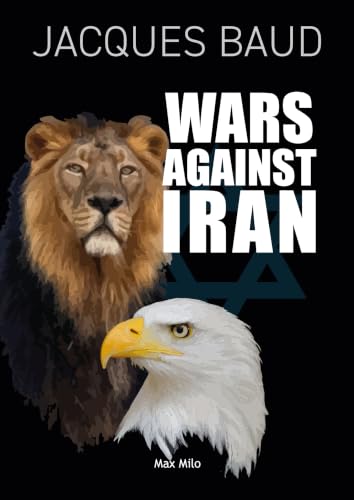
Col. Jacques Baud, on Dialogue Works, discusses Tucker Carlson's warning that a nuclear strike on Iran may be imminent.
Book:Wars Against Iran — Jacques Baud, English edition
Max Milo, 2026. 304 pages. ISBN 9782315028689.
Why is Iran, which has not attacked any country in more than two centuries, cast as the main threat in the Middle East? Jacques Baud draws on official documents, reports from international organizations, and the military record. He reconstructs how the United States, Israel, and Iran reached open confrontation, and how Tehran has answered since 2024.
Patrik Baab interviews Joe Lauria, editor-in-chief of Consortium News for his show Gegen den Strom, asking who really governs the United States.
Who really governs the United States? The elected politicians — or the economic interests that fund their election campaigns?
The U.S. midterm elections are on Tuesday. According to American journalist Joe Lauria, Donald Trump is coming under increasing pressure. Yet, the problems extend far beyond the incumbent president.
Lauria is the editor-in-chief of Consortium News. In a conversation with Patrik Baab, he analyzes the political and social crisis in the United States.
His thesis: American democracy is increasingly shaped by powerful economic lobbies, the arms industry, and the interests of large corporations. On key issues, Democrats and Republicans differ less than their public disputes might suggest.
Lauria is particularly critical of American foreign policy. He discusses the prospect of continued war with Iran, the support for Israel, the war in Ukraine, and Europe's role within Washington's geopolitical strategy.
He also identifies profound problems in the domestic sphere. What has become of Trump's promise to rebuild American industry? Why do many workers feel abandoned by both major parties? And what consequences might artificial intelligence and digitalization have for the labor market?
A key focus is the role of the media. Lauria argues that major media outlets do not merely report on political conflicts but actively contribute to social division. He also warns of authoritarian trends and discusses potential threats to democratic institutions and elections.
Finally, the discussion addresses a fundamental question: How do Americans perceive their own country? And what would need to happen for the political landscape to truly change?
A conversation about power and money, war and democracy, the crisis within American society, and the future of the United States.
Patrik Baab is a German journalist and author of several books, including Auf beiden Seiten der Front: Meine Reisen in die Ukraine [On Both Sides of the Front: My Travels in Ukraine] (2023).
Timeline:
00:00:00 Introduction
00:02:13 U.S. Midterm Elections: Outlook & Power Dynamics
00:03:07 U.S. Foreign Policy, Iran & the Role of Israel
00:06:15 Who Really Governs the U.S.? Political Parties & Lobbying Power
00:09:22 The Role of Big Tech and AI in the Defense Sector
00:10:48 U.S. Economy: Jobs, Tariffs & the Working Class
00:14:58 Loss of Trust & Political Representation of the Working Class
00:17:35 Mainstream Media, Polarization & Shaping Public Opinion
00:22:02 Geopolitical Strategy: Proxy Wars & Allies
00:24:38 Cult of Personality, Symbols of Power & the Constitution
00:29:36 Potential Succession in the White House: Vance or Rubio?
00:34:30 U.S. Security Strategy & Networks in Europe
00:36:01 Social Division & the Myth of the 'Noble Lie'
Emile Alexandrov is an assistant professor of philosophy, formerly at the University of Tyumen in Russia, and currently a visiting scholar at Waseda University in Tokyo. He is author of The Other Platonist Beginning and Metaphysics and Ineffable.
Emile explores the concept of the soul across Greek philosophy, Buddhism, Christianity, Hinduism, Jungian psychology, and other intellectual traditions, examining how ideas of intellect, awareness, desire, individuality, and transcendence have changed throughout history.
He discusses rebirth, karmic continuity, the Buddhist doctrine of anatta, the possibility of survival after death, and the difficult question of whether anything that survives remains individually identifiable. Alexandrov concludes by considering Russian cosmism, physical resurrection, transhumanism, and the possibility that the deepest continuity underlying the changing idea of the soul may be awareness itself.
(Recorded on Saturday, August 15, 2026)
Timeline:
00:00:00 Introduction
00:07:30 Soul and rationality
00:14:00 Desire and suffering
00:21:00 Silence and bliss
00:28:00 Enlightenment and reason
00:35:00 Tragedy and transcendence
00:42:00 Awareness and existence
00:49:00 Resurrection and survival
00:56:00 Universal resurrection
01:00:54 Conclusion
We know the problem: the multi-trillion dollar war machine that continues to march on, stealing wealth from the masses and giving it to the military-industrial contractors. So, what's the solution? Today on #SolutionsWatch, James talks to Ken Schoolland and Michel Chossudovsky about what can be done to stop the war machine in its tracks.
Europe, Alpha, casualties and society. Martyanov calls alpha the share of losses a unit can take and keep fighting, says the United States as a society cannot absorb casualties the way he says Iran did, and treats Europe as irrelevant at any negotiating table.
“Finish the job this time.” Sources close to Tehran and Islamabad say that is what Iran’s Supreme Leader told his commanders it is their obligation to do if the US strikes — and that “geographical constraints do not exist.” Larry Johnson’s sources say Trump’s option after Tuesday’s midterms is seizing Kharg Island, a gamble Pepe Escobar calls “absolutely suicidal.” Escobar, from Shanghai after midnight, and Zulfiqar Ali.
Timeline:
00:03:01 Washington’s option: Kharg Island, according to sources cited by Larry Johnson
00:17:29 “No traction”: Tehran’s answer to the Vance letter, per our host’s sources
00:20:51 The orders: “All have their orders, down to the level of the commander who’s going to push the button.”
00:21:24 Dimona: who decides, and on what trigger — per our host’s sources
00:33:03 Riyadh fears it’s next: the Saudi defence minister agreed in Tehran, per Mohsen Rezaei
00:40:52 Hormuz: “not gonna be a petrodollar oil chokepoint” — why Escobar says oil is splitting into blocs
Poland's Donald Tusk failed in a national address and blamed Russian bots and Dmitry Medvedev for his failed takeover of the Constitutional Tribunal, while Donald Trump floated a first Putin and Zelensky meeting at the G20 in Miami. Alex breaks down the US Embassy tipping off the FSB about a Moscow plot, Estonia defying Elbridge Colby, Zelensky asking Erdogan for money, and Germany's Gen Z protests against Merz. Is Europe finally cracking under the weight of Project Ukraine?
Timeline:
00:00:00 Intro from Athens
00:00:28 US Embassy warns Russia of Moscow plot
00:03:11 Trump vs CIA over oil refinery strikes
00:06:21 Estonia defies Colby on Russia rhetoric
00:09:04 Zelensky asks Erdogan for money and weapons
00:12:20 Trump hints Putin Zelensky meeting at G20
00:14:26 Tusk meltdown over Constitutional Tribunal
00:18:42 Tusk blames Russian bots and Medvedev
00:22:58 Rubio signals support for Nawrocki
00:26:11 France protests and Germany Gen Z revolt
00:30:23 Binance hack and North Korea claims
00:32:12 France data tax and BBC YouTube tax
00:34:24 EU parcel fees and new taxes
00:35:54 Turkey social media ban for under 15s
00:36:58 Clown world: Greenland and Lavrov at G20
A top election analyst says if Trump loses just the House on Tuesday his era is over. Would a Democratic House have the guts to cut Iran war funding? Plus an update on the uprising in France. Ray McGovern, Scott Ritter.
Ray McGovern is a former C.I.A. Russia analyst and presidential briefer, Scott Ritter is a former U.N. weapons inspector, intelligence officer and author. Joe Lauria is editor-in-chief of Consortium News. Cathy Vogan is executive producer of CN Live! and The World This Week.
Prof. Seyed Mohammad Marandi is a professor at Tehran University and a former advisor to Iran's nuclear negotiation team. He discusses U.S. war plans toward Iran and a last-minute off-ramp.
Timeline:
00:00:00 Introduction and Context of Current Tensions
00:02:50 Iran's Intelligence and Military Preparedness
00:10:09 Consequences of Potential Conflict
00:13:08 Iran's Strategic Moves and US Midterm Elections
00:18:05 Negotiation Dynamics and Off-Ramps
00:24:49 Potential Outcomes and Global Implications
00:27:48 The Escalating Tensions in the Middle East
00:31:22 The Political Landscape in Israel
00:36:31 The Regional Chessboard: Iran, Saudi Arabia, and Beyond
00:41:09 The Future of U.S. Influence in the Middle East
00:49:57 The Global Implications of U.S. Foreign Policy
Russia has finally begun striking the Dnieper bridges, and the missile strike that closed Kyiv's South Bridge could reshape Ukraine's entire supply picture. On this episode we break down why the bridge campaign took so long, how Operation Vivaldi gains are being reversed near Lyman as the Zaporizhzhia and Sloviansk Kramatorsk fronts shift, and why the consistent 10 to 1 body exchange ratio and a new academic casualty study challenge the Western narrative. If the bridges fall, can Ukraine's armies in the east hold?
Timeline:
00:00:00 Intro: bridges, front lines and Operation Vivaldi
00:00:53 Why Russia never hit the Dnieper bridges
00:02:18 Strikes on Kyiv's South Bridge and Zaporizhzhia
00:04:54 What losing the bridges means for Ukraine
00:06:10 Did the West overestimate Russian capabilities?
00:09:08 Politics, BRICS pressure and Ukrainian air defense
00:11:13 Ukraine's economy and missile programs falter
00:13:53 Zaporizhzhia, Orikhiv and the southern push
00:15:47 Operation Vivaldi reversed; Lyman offensive
00:17:35 The 10 to 1 body exchange ratio
00:21:02 New King's College study on casualties
00:25:21 The West's four legged narrative table
00:28:00 What would change Western perceptions
00:30:05 Final thoughts
Vance signed the letter. Iran’s intelligence believes Trump wrote it, a source close to Iran’s security chief Mohsen Rezaei says — and Pepe Escobar challenged that on air.
The same source says that after an hour with Iran’s Supreme Leader, Pakistan’s army chief has taken over the talks, and Iran’s answer is its money back and the blockade gone before any nuclear talks. Qatar remains the public mediator.
Pepe Escobar, from Shanghai, on the $6 billion, the order that blocks a deal, and the strike plans after Tuesday’s midterms. Zulfiqar Ali brings his source.
Timeline:
00:19:14 Inside the room with Iran’s leader — per our host’s source.
00:20:12 Pakistan takes the talks.
00:25:05 Vance signed. Trump wrote? Iran’s assessment — and the on-air challenge.
00:27:43 $6 billion back, blockade gone, nuclear talks last.
Poland is in a full blown constitutional crisis after Donald Tusk sent police to take over the constitutional tribunal, forcing President Nawrocki to turn his plane around as PiS warns of a judiciary coup. Alex breaks down what Brussels stands to gain from control of Poland's courts, plus the G20 family photo fiasco in Atlanta, Lavrov's verdict on Europe, and the Axios report on Iran talks ahead of the midterms. Did Tusk just make the biggest political blunder of his career?
Timeline:
00:00:00 Intro
00:00:40 Poland constitutional crisis explodes
00:04:41 Tusk suspends tribunal chief and sends in police
00:06:57 Judiciary coup claims and street protests
00:07:56 EU pressure on Poland's courts, borders and the euro
00:10:17 Nawrocki turns his plane around
00:13:45 Sikorski admits it was not elegant
00:14:51 G20 Atlanta family photo fiasco
00:18:20 Lavrov says Europe blew its chance
00:19:24 Iran talks, Qatar mediation and the midterms
00:23:35 Oleshky evacuation completed
00:25:45 Patriot PAC 3 deal delayed until after 2030
00:27:36 The Flamingo missile grift
00:29:57 Clown world: Kallas and Carney
00:33:31 Daily Mail doomsday space nuke
Joseph McMoneagle is a world-renowned remote viewer who has worked professionally in the field for almost four decades – both within the military and as a private contractor.
He is author of Mind Trek, The Ultimate Time Machine, The Stargate Chronicles: Memoirs of a Psychic Spy, and Remote Viewing Secrets. He is also coauthor of ESP Wars: East and West.
He is the recipient of a congressional Legion of Merit Award for his remote viewing work within the U.S. government military intelligence services. He has successfully demonstrated remote viewing on television, both live and taped, on numerous occasions.
In this video, rebooted from 2016, he points out that he is comfortable working with “honest skeptics” in the media. He prefers such individuals to “true believers”.
On the other hand, working with hostile scoffers is a waste of his time. He describes several examples in which he demonstrated remote viewing for television audiences both in the United States and Japan.
He explains many of the difficulties that people in the media have in presenting parapsychological phenomena. In many instances, they are afraid of ridicule if they appear to endorse the reality of the phenomena.
Thomas Fazi is an Italian journalist and author focusing on economics and geopolitics.
He discusses NATO's hybrid warfare, deception, and permanent war with Glenn Diesen.
Timeline:
00:00:00 Thomas Fazi on European politics and hybrid warfare
00:02:18 Why Fazi calls hybrid warfare a dangerously vague concept
00:05:05 A counter-database of disputed Russian-war claims
00:08:26 Baltic cables, a Lithuania plane crash, and Heathrow
00:12:15 The drone-sighting wave and what investigations found
00:16:05 Stray drones, the von der Leyen claim, and evidence
00:18:02 Nord Stream and the consequences of misattribution
00:23:24 Threat narratives, domestic politics, and rearmament
00:28:06 Information warfare, censorship, and Romania’s election
00:30:01 Gladio and the danger of manufactured threats
00:35:58 RussiaGate and the persistence of disputed claims
00:42:09 Public opinion, propaganda, and rising repression risks
Russia's Black Sea blockade has quietly expanded into the territorial waters of Romania and Bulgaria, with sea drones sinking cargo ships bound for Ukraine near Constanta and Varna while NATO stays silent. Alexander breaks down the strikes on the Dnipro bridge and railway station, the Starlink feud between Elon Musk and the US intelligence community, the 500 PAC 3 interceptors Ukraine will not see until 2030, and Lavrov's sharp exchange at the G20 in Atlanta. Has the Black Sea become a Russian lake while the West looks the other way?
Timeline:
00:00:00 Intro
00:00:35 Fresh Russian strikes on Kiev
00:01:07 Dnieper bridge in Dnipro hit
00:04:33 Kiev South Bridge and Zaporozhye bridge status
00:06:39 Dnipro railway station struck
00:11:00 Eleven cargo ships sunk in the Black Sea
00:14:28 Ships hit in Romanian and Bulgarian waters
00:15:28 The Bulgarian presidential election angle
00:18:44 Russian sea drones and the Turkish Straits
00:22:57 Black Sea becomes a Russian lake
00:27:08 Russian satellite over Kiev during the strike
00:30:43 Rassvet satellites and Iskander precision
00:35:45 Ukraine refinery strikes defy Trump
00:41:51 The Atlantic, Elon Musk and the Starlink fight
00:48:31 500 PAC 3 interceptors that do not exist yet
00:58:43 Lavrov at the G20 in Atlanta
01:03:32 Lavrov rebuffs Deutsche Welle on Putin and Zelensky
01:07:18 Oleshky ceasefire and front line advances
01:16:55 Europe far behind on diplomacy and Abu Dhabi
01:19:21 Iran island plans and the Snake Island lesson
America lost. Iran didn’t win. Vijay Prashad, back from Brazil and China, says that is why neither side will make the first concession — Iranian nuclear material or American bases.
Our host’s sources say Iran will ask China and Russia to act as guarantors of the Trump administration’s conduct — a task the host himself calls impossible. Meanwhile Saudi Arabia’s defence minister sat down in Tehran, and Prashad says what a real UN chief would do: “set up the UN headquarters in Gaza.”
Timeline:
00:18:01 Who could guarantee Trump? China, Russia and the Islamabad MoU — per our host’s sources.
00:25:53 “You can lose a war without the other side having won it”: Vijay Prashad’s verdict.
00:42:15 Move the UN to Gaza: “we dare you to bomb us.”
The US and Israeli build up to another round of strikes on Iran that's happening in front of our eyes is being concealed by talks of intense mediation efforts from Qatar and other regional actors. Geopolitical analyst Mark Sleboda joins the show to discuss what this build up actually looks like, what it means for the geopolitical landscape, and provides his expert military analysis on the theaters of war from West Asia/Middle East to Ukraine.